TL;DR
- ·A veterinary answering service picks up your clinic's calls when your team can't, during surgery, at lunch, in the morning rush and after hours, and either takes a message, routes the call or books the appointment.
- ·The best veterinary answering service follows the emergency list your vets write, sends urgent calls to your on-call vet or the nearest emergency hospital, and books every routine call into your schedule instead of leaving a message.
- ·Lani AI answers your clinic line 24/7 in under a second, books appointments into your scheduler and warm-transfers urgent calls using your rules. 7-day pilot, completely free. If you decide to move forward, there's a setup.
What is a veterinary answering service?
A veterinary answering service is a service that answers your clinic's phone when your front desk can't, then takes a message, routes the call to the right person or books the appointment. Most clinics use one for after-hours calls, and more now use one during the day too, for the hours when every person at the desk is already helping someone at the counter.
There are 3 kinds. A live answering service is a call center whose operators read a script and take messages. An after-hours referral line is a recording that sends callers to the nearest emergency hospital. An AI answering service picks up every call, holds a real conversation and can book into your schedule. A vet answering service that only takes messages still leaves your team with a pile of callbacks the next morning.
Message-taking service
- 1New client calls at 12:30 PM about a limping dog
- 2Operator reads the script & takes a message
- 3Message reaches the clinic an hour later
- 4Front desk calls back between appointments
- Owner already booked at another clinic
AI answering service
- 1New client calls at 12:30 PM about a limping dog
- 2Answered in under a second
- 3Asks the questions your clinic set
- 4Offers the next open exam slot
- Appointment booked & logged to your CRM
The trap is judging a service by whether it answers. Every option answers. What matters is what happens next: does the new client end up booked, does the urgent call reach a vet, and does anything land in your systems without someone retyping it?
Why does a vet clinic need an answering service during the day?
A vet clinic needs an answering service during the day because the phone rings hardest when the team is busiest: the opening rush, lunch, surgery mornings and the end-of-day pickups. The same people who answer the phone are checking patients in, taking payments and holding a nervous dog's leash, so calls roll to voicemail at exactly the moments new clients try to reach you.
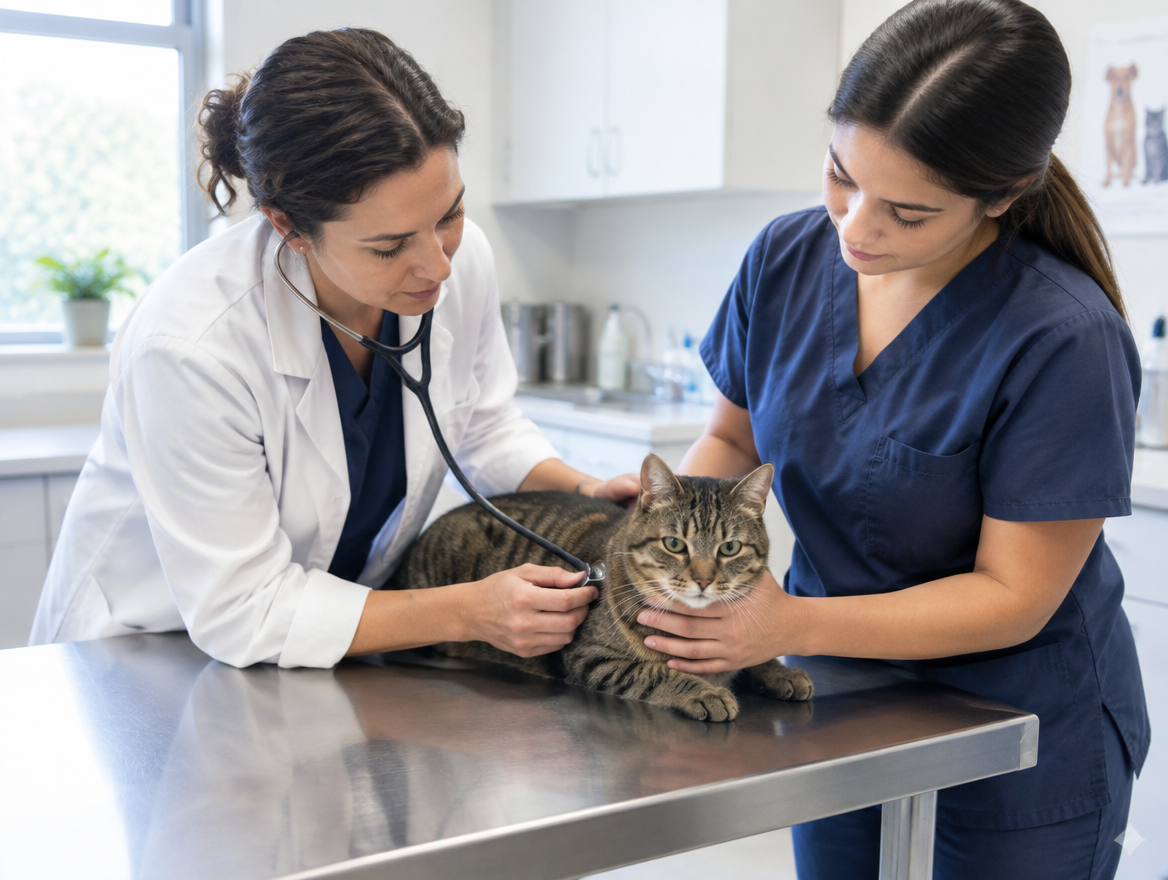
Many callers don't leave a voicemail at all. A pet owner with a sick cat calls the next clinic on the map, and a new client shopping for a vet does the same. Your call log tells you how often it happens: count the calls nobody answered from numbers you didn't know. That's the number a daytime veterinary answering service is meant to shrink.
The trap is hiring for the after-hours problem only. After-hours coverage matters for emergencies, but most of the bookable calls, new patients, vaccines, dental cleanings and sick visits, arrive while you're open. A service that covers both is what keeps your schedule full.
Live, AI or hybrid: which veterinary answering service fits your clinic?
For most general practices, an AI answering service with a warm transfer to your team fits best, because it books routine calls itself and sends the calls that need a person to a person. A live service fits a clinic that only wants messages taken. A referral recording fits a clinic that has a 24-hour emergency hospital nearby and no on-call vet at all.
Compare them on what each one does with a call, not on the price of a minute. The table below covers the 4 setups clinics actually use. A virtual veterinary receptionist can mean any of them, so ask which one a vendor is really selling. Our guide to AI receptionists vs virtual receptionists covers that difference in more depth.
Veterinary answering service options, compared
| Setup | What happens to a routine call | What happens to an urgent call | Best fit |
|---|---|---|---|
| Voicemail or referral recording | Caller leaves a message, or hangs up | Caller is told to go to the emergency hospital | Clinics with a 24-hour ER nearby & no on-call vet |
| Live message-taking service | Operator takes a message for the morning | Operator pages the on-call vet from a script | Clinics that only want messages taken |
| AI answering service | Answered, questions asked, appointment booked | Warm-transferred to your on-call vet, or sent to your ER, using your rules | General practices that want routine calls booked 24/7 |
| Hybrid (AI first, team second) | AI books it, or hands it to your front desk | AI follows your list, then transfers with the conversation attached | Busy practices with a front desk & on-call rotation |
The trap is a hybrid where nobody owns the handoff. If the AI answers and a live service also answers, write down which one takes which hours and which calls, or callers get 2 different answers to the same question.
How should a veterinary after-hours answering service handle emergencies?
A veterinary after-hours answering service should follow an emergency list your vets write, and send every call on that list to your on-call vet or to the emergency hospital you name, straight away. It shouldn't diagnose, give dosing advice or decide on its own what counts as urgent.
Write the list in plain words the way owners describe problems on the phone: trouble breathing, a pet that collapsed or won't wake up, something toxic eaten, hit by a car, a swollen belly with retching, a seizure, a difficult birth. Then decide where each one goes. Some clinics transfer to the on-call vet, others give the address of the emergency hospital, and many do both depending on the hour. A veterinary emergency answering service is only as good as that list.
Incoming calls
- All sorted
Urgent: on-call vet or ER
- Dog ate a bar of chocolate
- Cat breathing with mouth open
- Dog hit by a car
Routine: booked or handled
- Vaccine appointment for a new puppy
- Refill request for flea medication
- New client wants a wellness exam
The trap is a list nobody tested. Call your own line after hours with 2 or 3 of the situations on it and listen to what the caller hears. If anything sounds like medical advice, change the rule before a real owner hears it. Our after-hours answering service guide covers the overnight setup in more detail.
What should a vet answering service connect to?
A vet answering service should connect to your phone line, your appointment schedule and the place you keep client records, so a call ends as a booked appointment and a note your team can see, not as an email someone has to retype. Without those connections, even a good answering service hands your front desk more work.
Start with your veterinary phone system. Most answering services work by call forwarding: unanswered calls, or all calls after a set hour, forward to the service's number. Check your phone system can forward on no-answer and on a schedule, and that your caller ID still shows the real caller. Then ask how bookings reach your schedule and how the call record reaches your CRM.
Checklist
What your veterinary answering service must do
- Answer on the first ring, day & night, with your clinic name
- Follow the emergency list your vets wrote, word for word
- Transfer urgent calls to your on-call vet, or give your ER hospital address
- Book routine visits into your real schedule, not a message pile
- Ask new clients the questions you set: pet name, species, reason for the visit
- Text back anyone who hangs up before it picks up
- Write every call & its outcome back to your CRM
- Speak the languages your clients speak
The trap is a vendor that says it integrates with everything. Ask to watch a test booking land in your own calendar during the demo. If they can't show it, plan on your team copying every message by hand.
How does an AI answering service help a vet clinic grow?
An AI answering service helps a vet clinic grow by turning the calls you already get into booked appointments, especially new clients who call once and move on if nobody picks up. It doesn't need more marketing to work: it books the demand your reviews and your Google profile already create.
Lani AI answers your clinic line 24/7 in under a second, asks the questions you set, books into your scheduler and warm-transfers urgent calls to your team with the full conversation attached. If someone hangs up first, a missed call text back goes out within seconds, every call is written back to your CRM, and it speaks 30+ languages. Lani AI also helps service businesses improve their Google Business Profile, and our veterinary marketing guide shows how the profile and the phone work together.
The trap is switching it on without your rules. The AI should know your services, your hours, which calls are urgent and who's on call, and it should say it's an AI if a caller asks. Our AI receptionist for veterinary clinics post walks through a full day of clinic calls.
Template
Questions to send any veterinary answering service before you sign
Copy these into an email and ask for written answers.
How do you handle a call on our emergency list at 2 AM, step by step?
Can you transfer urgent calls to our on-call vet, and give our ER hospital address when nobody answers?
Do you book appointments into our schedule, or only take messages?
How does each call and its outcome reach our CRM?
What happens when a caller hangs up before you pick up?
Which languages can you answer in?
Can we run a free trial on our own line before we commit?
How do you test a veterinary answering service on your own line?
Test a veterinary answering service by forwarding your own overflow and after-hours calls to it for a week, then calling it yourself with the situations your clinic sees most. A demo line tells you how the vendor sounds. Your own line tells you how it handles your clients.
Make 6 test calls before the real week starts: a new client wanting a wellness exam, a vaccine booking, a refill request, a question about your hours, and 2 calls from your emergency list, one during the day and one after you close. Check every outcome in your schedule and your CRM the next morning.
Step by step
Testing a veterinary answering service, step by step
- 1
Write your emergency list
Your vets name the situations that go straight to the on-call vet or the ER.
- 2
Set your booking rules
Visit types, lengths & the questions to ask new clients.
- 3
Forward your line
Overflow during the day & every call after you close.
- 4
Make your 6 test calls
Wellness exam, vaccine, refill, hours & 2 calls from the emergency list.
- 5
Check every outcome
Bookings in your schedule, transfers to the right person, notes in your CRM.
- 6
Run a real week
Count the appointments booked & the urgent calls routed.
The Lani AI 7-day pilot is completely free. If you decide to move forward, there's a setup. Forward your line, make your test calls, and count how many appointments it books in a real week. You can run your own numbers in the ROI calculator first, or read how the HVAC answering service guide runs the same test in a trade with the same after-hours pressure.
Frequently asked questions
What does a veterinary answering service do?
It answers your clinic's calls when your team can't, during busy hours and after you close. Depending on the type, it takes a message, routes urgent calls to your on-call vet or emergency hospital, or books the appointment into your schedule.
What is the best veterinary after-hours answering service?
The best one follows the emergency list your vets write, transfers urgent calls to your on-call vet or gives your ER hospital address, and books routine calls instead of leaving them for the morning. Test it on your own line before you sign.
Is a virtual veterinary receptionist the same as an answering service?
Not always. Vendors use the term for live operators working remotely, for message-taking call centers and for AI that answers and books, so ask which one you're getting and what it does with a call.
Can an AI answering service handle veterinary emergencies?
It can route them, not treat them. It follows the list your vets write and sends those calls to your on-call vet or the emergency hospital you name, without giving medical advice.
How do I try an AI veterinary answering service?
Forward your overflow and after-hours calls to it for a week and make your own test calls. Lani AI offers a 7-day pilot that's completely free; if you decide to move forward, there's a setup.
Ready when you are
See if Lani AI is right for your business.
7-day pilot, completely free. Live by the end of this week.