TL;DR
- ·Veterinary marketing is everything that brings a new pet owner to your clinic, and for most practices the biggest lever is free: your Google Business Profile and local SEO.
- ·Google ranks local results on relevance, distance and prominence, so a complete profile, steady reviews and clear service pages beat a bigger ad budget, as long as someone answers the calls they bring in.
- ·Lani AI answers your clinic's phone 24/7 in under a second, books into your calendar and texts back anyone who hangs up. 7-day pilot, completely free. If you decide to move forward, there's a setup.
What is veterinary marketing, & where should a clinic start?
Veterinary marketing is everything that brings a new pet owner to your clinic and keeps existing clients coming back: your Google Business Profile, your website, reviews, reminders, social posts and paid ads. For most independent practices the best place to start isn't an ad budget. It's the free listing that shows up when someone types "vet near me" with a sick dog on the couch.
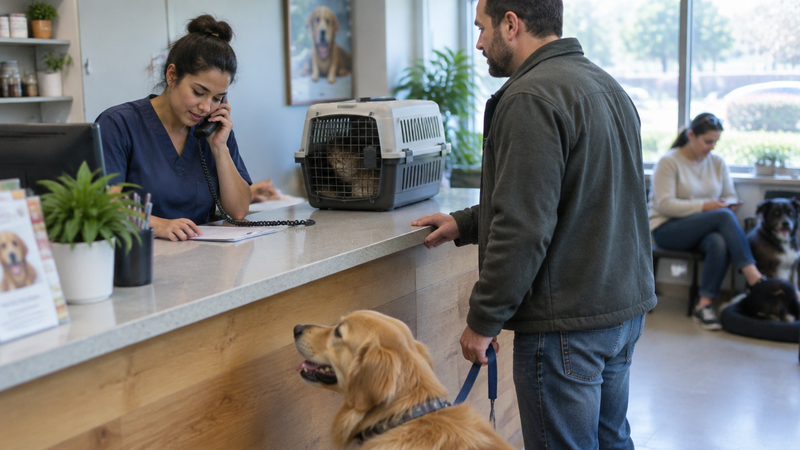
That search usually ends in a phone call, not a form. A pet owner taps Call on your profile, and the next 10 seconds decide whether they become a client or try the next clinic on the map. So good veterinary marketing has 2 halves: get found on Google, then answer and book every call it sends.
The trap is spending on the first half and ignoring the second. Paying an agency for vet marketing while calls go to voicemail at lunch is like filling a bucket with a hole in it. If you want the phone side first, our guide to the AI receptionist for veterinary clinics covers it in depth.
Why does a Google Business Profile matter so much for veterinarian SEO?
Because it's what Google shows first for local searches, above the regular website results, in the map pack. Google's own Business Profile help page says local results are based mainly on 3 things: relevance (how well your profile matches the search), distance (how far you are from the searcher) and prominence (how well known you are, including your review count and rating).
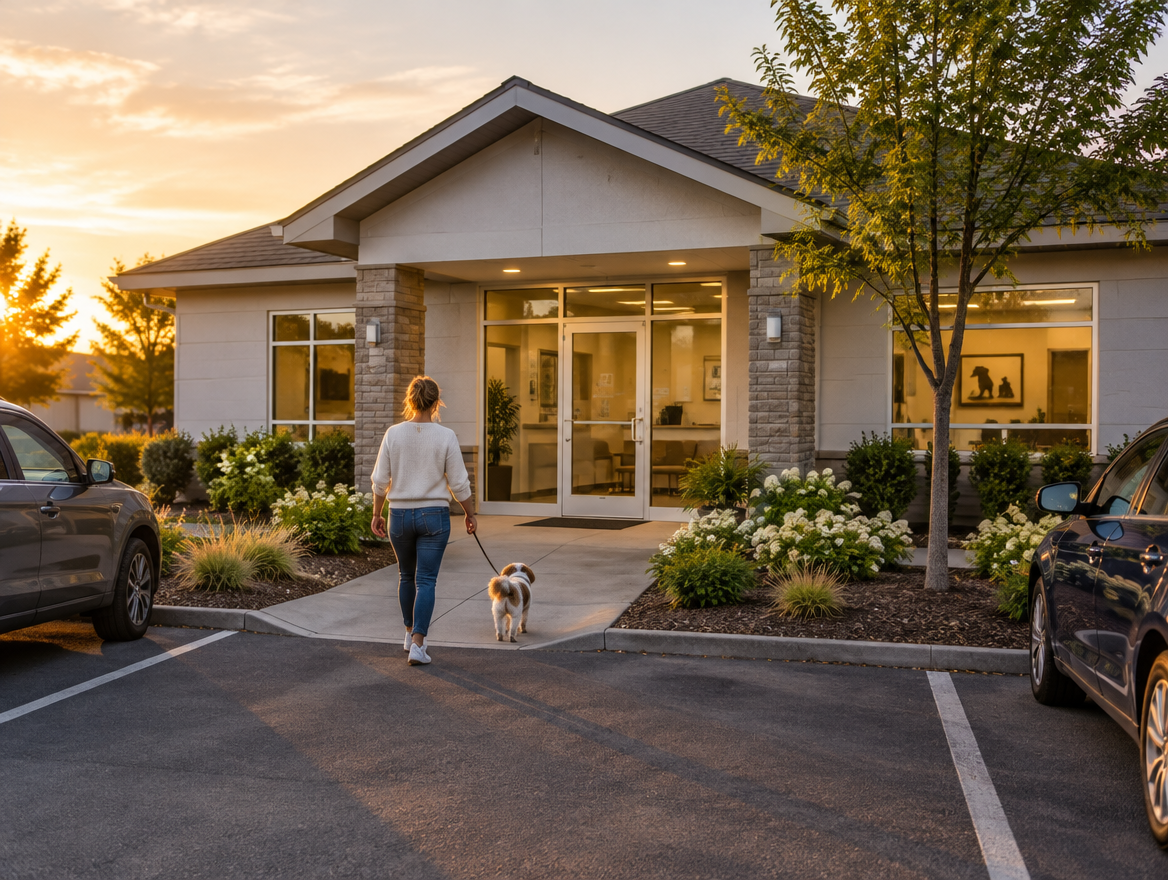
You can't move your clinic, so distance is fixed. Relevance and prominence are the 2 you control, and both come down to work an owner or practice manager can do in an afternoon: the right categories, complete services and hours, real photos, and a steady flow of reviews you reply to. Google also says that complete, accurate information makes a business more likely to show for the right searches.
The trap is treating the profile as set-and-forget. Wrong holiday hours send an owner with an emergency to a locked door, and that becomes a 1-star review. Google also lets you set special hours for holidays, so use them every time.
How do you set up a veterinary Google Business Profile that gets found?
Start with the primary category, because Google weighs it heavily for relevance: for most general practices that's Veterinarian, with secondary categories such as Animal hospital or Emergency veterinarian service only if they're true. Then fill in every field the profile offers, in the words pet owners actually use.
List your services one by one (wellness exams, vaccines, dental cleanings, spay and neuter, surgery, exotics if you see them) so the profile matches more searches. Add real photos of your building, lobby, exam rooms and team. Set your service area only if you do house calls, and keep your name, address and phone number exactly the same as on your website.
Checklist
Your veterinary Google Business Profile checklist
- Profile claimed & verified by the practice, not an old agency
- Primary category set to Veterinarian, secondary categories only if true
- Every service listed: wellness, vaccines, dental, surgery, exotics
- Regular hours plus special hours for every holiday
- Phone number that rings a line someone (or something) always answers
- Website link to your homepage or a booking page
- 10 or more real photos: outside, lobby, exam rooms, team
- Name, address & phone identical to your website
The trap is keyword stuffing. Adding "Best Vet Near Me" to your business name breaks Google's guidelines and can get the profile suspended. Use your real name, and let the categories, services and reviews do the work.
How do reviews help vet marketing, & how should you reply?
Reviews feed prominence directly: Google names review count and rating as part of how it judges a business, and pet owners read them before they call. The simplest system is to ask every happy client, every day, with a short text after the visit that links straight to your review form.
Reply to every review, good or bad, within a couple of days. Keep replies short, thank the person, and never confirm medical details about a pet in public. For a bad review, acknowledge it, offer to talk offline, and give a phone number or email. Future clients read the reply more than the complaint.
Template
Review request & reply templates
Copy these, then put them in your own words.
Request text: Thanks for bringing [pet name] in today. If we took good care of you both, a quick Google review helps other pet owners find us: [review link]
Reply to a 5-star review: Thank you, [first name]! It was great to see you. We'll see you at the next checkup.
Reply to a critical review: We're sorry your visit didn't go the way it should have. We'd like to make it right, so please call our practice manager at [number] or email [address].
Never in a reply: a diagnosis, a treatment, a bill amount or anything else about the pet's medical record.
The trap is buying reviews or offering a discount for them. Google's policies prohibit incentivized and fake reviews, and it can remove them or restrict your profile. Asking every client is allowed. Paying for stars isn't.
What website SEO does a veterinary practice need?
A fast, mobile-friendly site with 1 page per main service and a clear phone number at the top of every page. When someone searches "dog dental cleaning" plus your town, a dedicated dental page has a much better chance of matching than a homepage that lists 20 services in 1 line.
Veterinary marketing channels, compared
| Channel | What it does | Cost type | What to check |
|---|---|---|---|
| Google Business Profile | Shows you in the map pack for local searches | Free, your time | Categories, hours, reviews, photos |
| Website SEO | Ranks service pages for specific searches | Your time or an agency | 1 page per service, speed, tap-to-call |
| Paid search ads | Buys the top spot for chosen searches | Pay per click | Cost per booked visit, not per click |
| Reviews | Builds prominence & trust | Free, a daily habit | Ask every client, reply to every review |
| Reminders & reactivation | Brings back clients who are due or lapsed | Your software or AI | Overdue vaccines & annual exams booked |
Add the basics that help search engines read the page: a title and description per page that say the service and the town, your address and hours in the footer, and LocalBusiness structured data (schema.org has a VeterinaryCare type made for clinics). If you serve several towns, a short page per town with real details beats 1 page that lists them all.
The trap is a beautiful site that hides the phone number. Most clinic searches happen on a phone, so the number should be 1 tap away on every page, and that tap should reach someone who can book.
Where does AI fit in veterinary marketing?
AI's biggest job in vet marketing is making sure the calls your marketing pays for actually turn into visits. Every channel above ends the same way, with a pet owner calling, and front desks are busiest at exactly the hours new clients call: mornings, lunch and right after work.
Incoming call
New pet owner, 12:15 PM
Lani AI
Yes, we are. I can book a new puppy visit. What's your puppy's name & age?
Routine new client
Booked into the first open puppy slot
Urgent symptom on your list
Transferred to the team right away
Species you don't see
Polite no & a referral
An AI receptionist like Lani AI answers your clinic's phone 24/7 in under a second, books new-client visits into your calendar, transfers urgent calls to your team using rules you write, and writes every call back to your CRM. If someone hangs up before it picks up, a missed call text back keeps the conversation going. Lani AI also helps service businesses improve their Google Business Profile, so the profile and the phone work as 1 system.

The trap is letting AI decide what's urgent. You write the list (toxin ingestion, trouble breathing, seizures, hit by a car) and the AI follows it every time, overnight included. Our guide to after-hours answering with AI covers how to set those rules.
How do you test your veterinary marketing on your own line?
Search for your clinic the way a new client would, then call it. Type "vet near me" and "emergency vet" plus your town on your phone, see where you show, open your profile and tap Call at lunch, at 6 PM and on a Saturday. What happens on those calls is what happens to your marketing.
Then check your phone system's call log for the last 2 weeks and count the calls nobody answered. Many callers hang up without leaving a voicemail, so the log tells you more than the voicemail box. That number is the marketing you already paid for and didn't book.
If that count is more than a handful, test an AI receptionist on it. The Lani AI 7-day pilot is completely free. If you decide to move forward, there's a setup. Forward your overflow and after-hours calls, make your own test calls, and see how many new-client visits it books. You can also run your numbers in the ROI calculator first.
Step by step
Testing your veterinary marketing, step by step
- 1
Search like a new client
"Vet near me" & "emergency vet" plus your town, on a phone, logged out.
- 2
Fix the profile gaps
Categories, services, holiday hours & photos from the checklist above.
- 3
Call from your own profile
Tap Call at lunch, at 6 PM & on a Saturday, and note what happens.
- 4
Count the missed calls
Use your phone system's call log for the last 2 weeks, not the voicemail box.
- 5
Run the 7-day pilot
Forward overflow & after hours, then count new-client visits booked.
Frequently asked questions
What is the best veterinary marketing for a small clinic?
Start with your Google Business Profile, because it's free and shows above the regular results for local searches. Then add steady reviews, 1 web page per service and make sure every call it brings in gets answered.
How does SEO work for veterinarians?
Google ranks local results on relevance, distance and prominence. Veterinarian SEO means a complete Business Profile with the right categories, real reviews and clear service pages on your website.
Which Google Business Profile category should a vet clinic use?
Most general practices use Veterinarian as the primary category. Add secondary categories like Animal hospital or Emergency veterinarian service only if they describe what you really offer.
Can I offer a discount for Google reviews?
No. Google's policies prohibit incentivized reviews and it can remove them or restrict your profile. Ask every client for an honest review instead.
How does AI help with marketing for veterinary practices?
It answers and books the calls your marketing brings in, including at lunch and after hours, and texts back anyone who hangs up. You can try Lani AI with a 7-day pilot that's completely free; if you decide to move forward, there's a setup.
Ready when you are
See if Lani AI is right for your business.
7-day pilot, completely free. Live by the end of this week.